
Salmon at Night: Lake Washington
Research Update: June 2026
Thank you!!
Thank you to all who participated in our joint UW/USGS/MidSound Fisheries light at night study! The June fish community at night was different from springtime. Rock bass, black crappie, bluegill, brown bullhead, and a new cohort of small yellow perch were common along the shoreline at night. We recorded a large carp close to shore, a handful of sockeye and Chinook salmon that were in the same area of shoreline each night, yellow perch spawning behaviors, and freshly eaten crayfish.
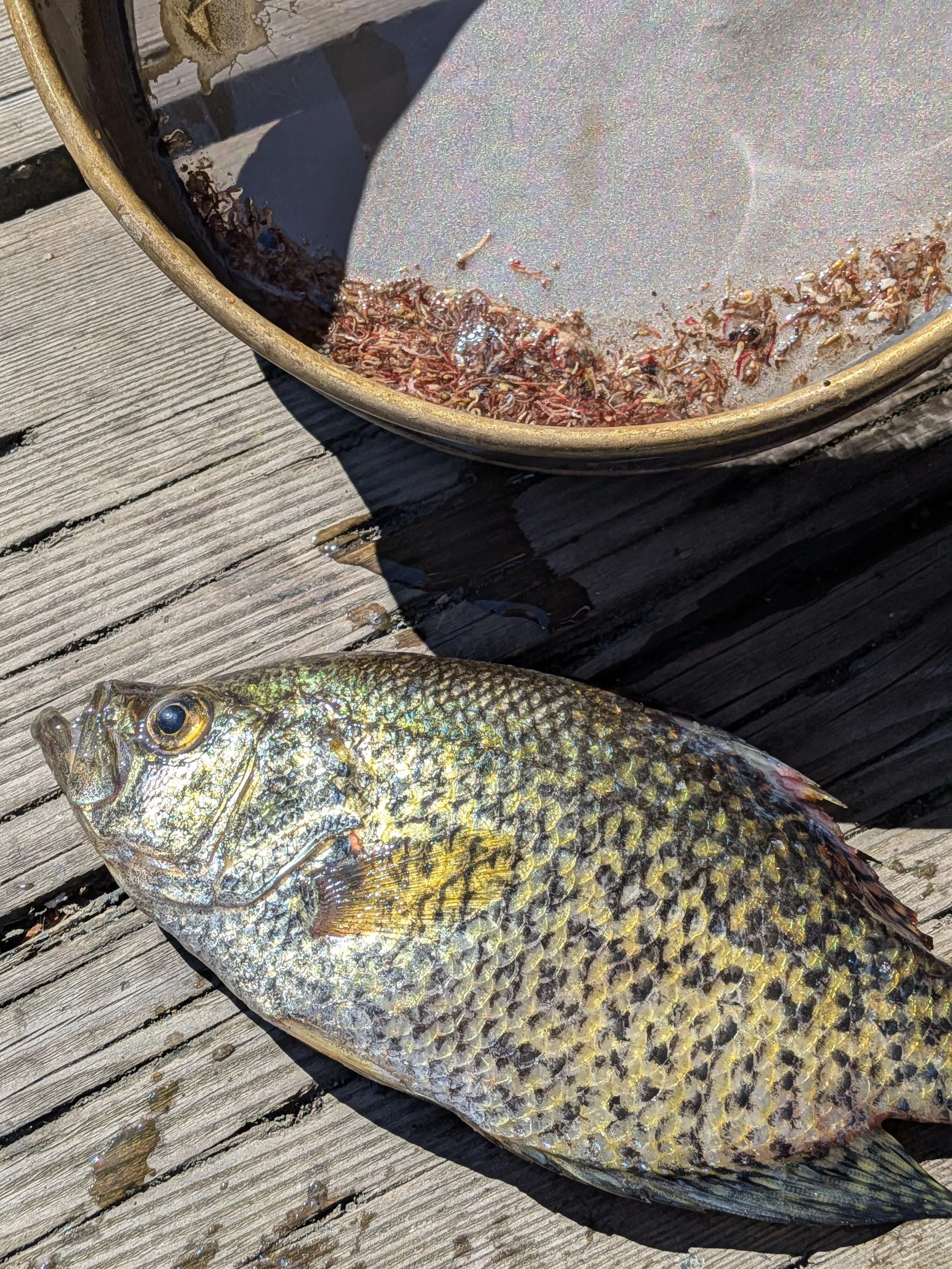
Above: A Black Crappie and contents of stomach.
What’s next?
Why did we do this study?
Young salmon in the Lake Washington watershed can have high mortality before they leave fresh water for ocean life. For example, around 3% of young sockeye survive their first year in Lake Washington. Yellow perch are a non-native predator and in the last few decades, their population has boomed in Lake Washington. While not a voracious predator of salmon, their large numbers can take a toll on the juvenile salmon population. In 2024, using nighttime snorkel surveys, we found many yellow perch, especially smaller ones, in proximity to salmon along your shoreline. Both showed resting behaviors, and it’s possible both were avoiding getting eaten in deeper waters. Perch may have also used light at night to feed on salmon. This year, we set gill nets and asked you to modify your lighting so we could study if yellow perch and salmon changed their behavior depending on lighting.
We are processing the diet and fish catch data and light measurements, and I will be able to share preliminary results with you in September or October. While the yellow perch in our nets did eat some salmon, yellow perch stomachs were typically emptier than other fish, e.g., black crappie, which had stomachs full of invertebrates. We are still determining, by digestion level, when the salmon we found in diets had been eaten.
Our hope is to return to Lake Washington in a few winters, contingent on funding, to continue the study. We would target the early season, beginning in February, when hundreds of thousands of sockeye salmon fry begin to be released in the Cedar River each week and make their way to the lake along with natural origin Chinook salmon, and we would use different nets and target fish behavior during certain blocks of the night.
Ultimately, we want to understand if residential shoreline lighting influences nighttime predation on salmon. If it does, either seasonally (as young salmon are along the shoreline a few months each year), by moon phase, or over the course of the night, we want to present Lake Washington homeowners with the best available science so all can be informed stewards of their shoreline.
Research Update: May 2026
Final Sampling Nights are Next Week: June 15 & 17, 2026
June 15 & 17 are our final nights of setting nets and asking for your participation with your lighting. June 15 will be lights on, and June 17 will be lights off. Thank you for your participation in our study!
Later this summer we will stop by each house with a token of gratitude and would be happy to share preliminary findings from our study with anyone who is interested.
Research Update: May 2026
Yellow perch were eating mostly the same as the earlier months, a lot of insects, larval bugs (chironomid midge), and plankton, like daphnia. Fish have to eat hundreds of invertebrates to get the same energy as they would from a small fish. A small yellow perch had a partially digested fish in its gut (photo to the right). We netted brown bullhead, and even a goldfish!.
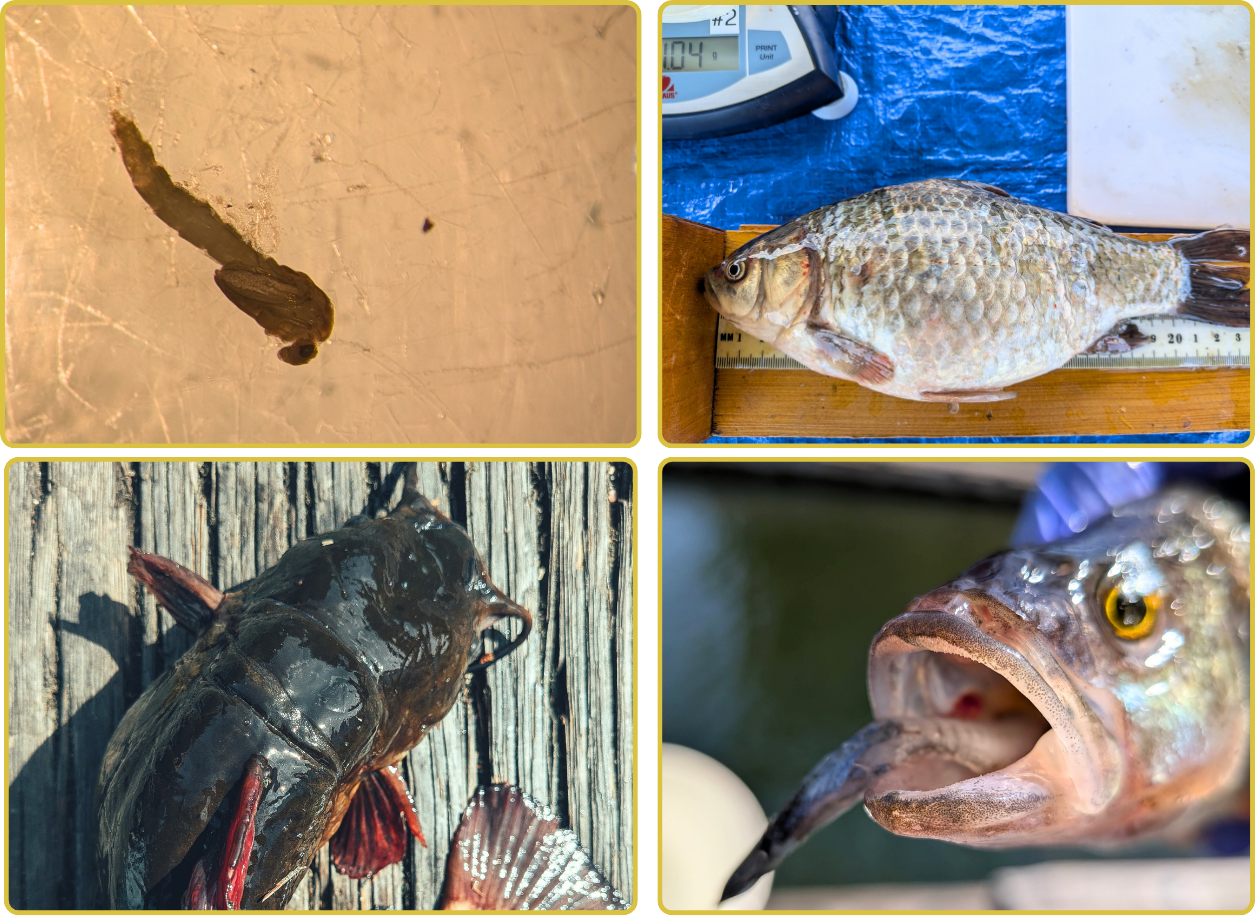
Photos L to R, top to bottom: A chironomid midge; a goldfish; a brown bullhead; a yellow perch with partially digested fish
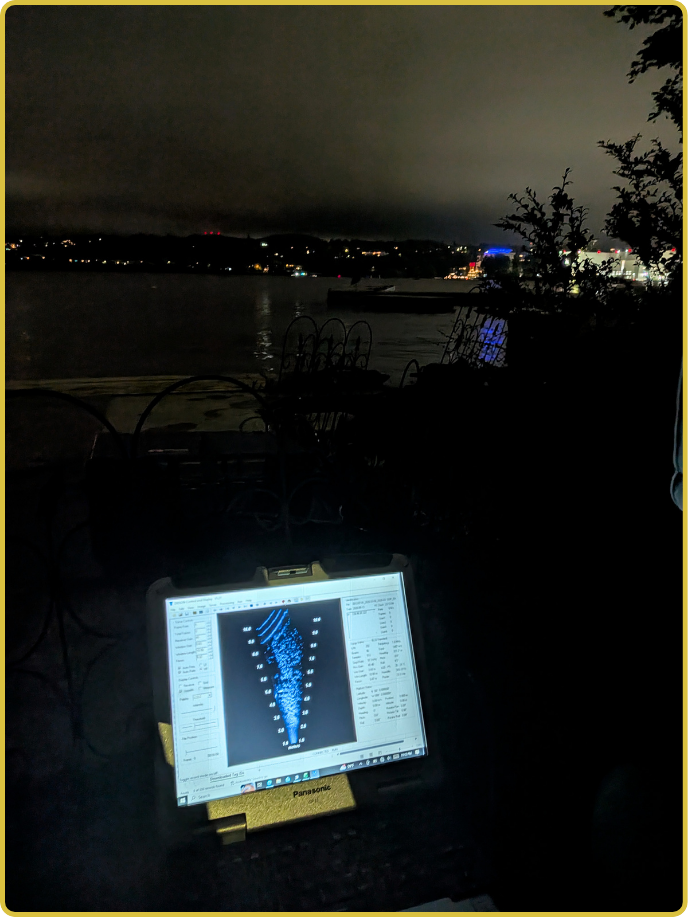
Along with setting our acoustic camera along the shoreline (see photo to the right), we took video of fish at night. We saw Chinook salmon swimming and resting, yellow perch spawning and resting, and other fish like sculpin, stickleback, brown bullhead, and largemouth bass.
We expect most young salmon to have moved offshore this month and be on their way to the Locks as they prepare to leave for the ocean.
Video: Chinook salmon, yellow perch, and a small largemouth bass next to the acoustic camera
Research Update: April 2026
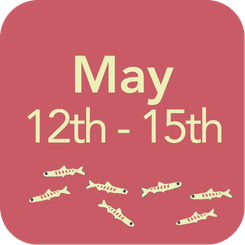
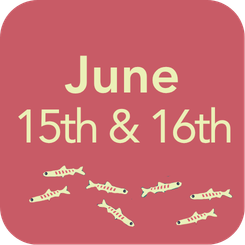
Next month we hope to come sometime between May 12th to May 15th, prioritizing the two nights that don’t have rain. Our light technology requires clear skies to operate, so we haven’t been able to take light measurements in April. Thank you for your patience as we work with the spring weather. We’re looking forward to sharing the light measurements with you in May.
Next Testing Dates: May & June 2026
Spring Feeding Time!
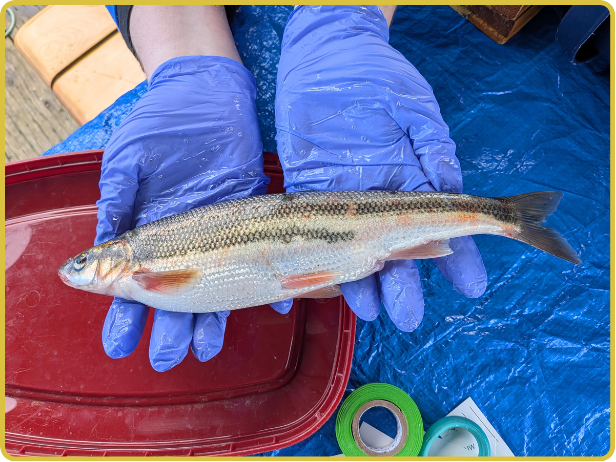
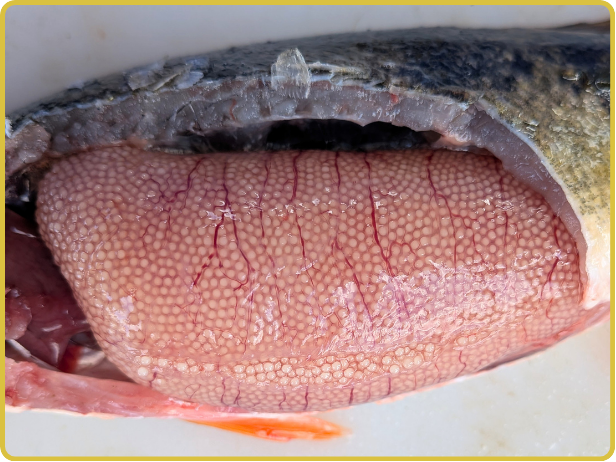
Left: Photo of a peamouth captured during gill net surveys. Right: the full egg sac of a female perch.
As the weather begins to warm, we see more and more fish in the lakes. These fish are juvenile salmon migrating out of nearby streams and into the lakes to forage as they make their way to the Puget Sound. We’re also seeing yellow perch, peamouth, trout and carp. With spring upon us, this is the time when yellow perch spawn and our team has found female perch full of eggs and males full of milt, or sperm.
During April, our team set gill nets on both nights when residential lights were on and then off. Based on the direction fish were facing in the nets, we would determine which way they were swimming when caught. The majority of perch that were captured had spent the night in water closer to the shoreline, while peamouth were in deeper waters. This helps us determine where in the lake these species prefer to spend the night.
When looking at the stomach contents of fish from the gill net, we’re finding bellies full of insect larvae (midges), and benthic arthropods (such as water mites). However, as the weather continues to warm, and the larvae sprout wings and head for the skies, we predict that the perch will begin feeding on smaller fish.
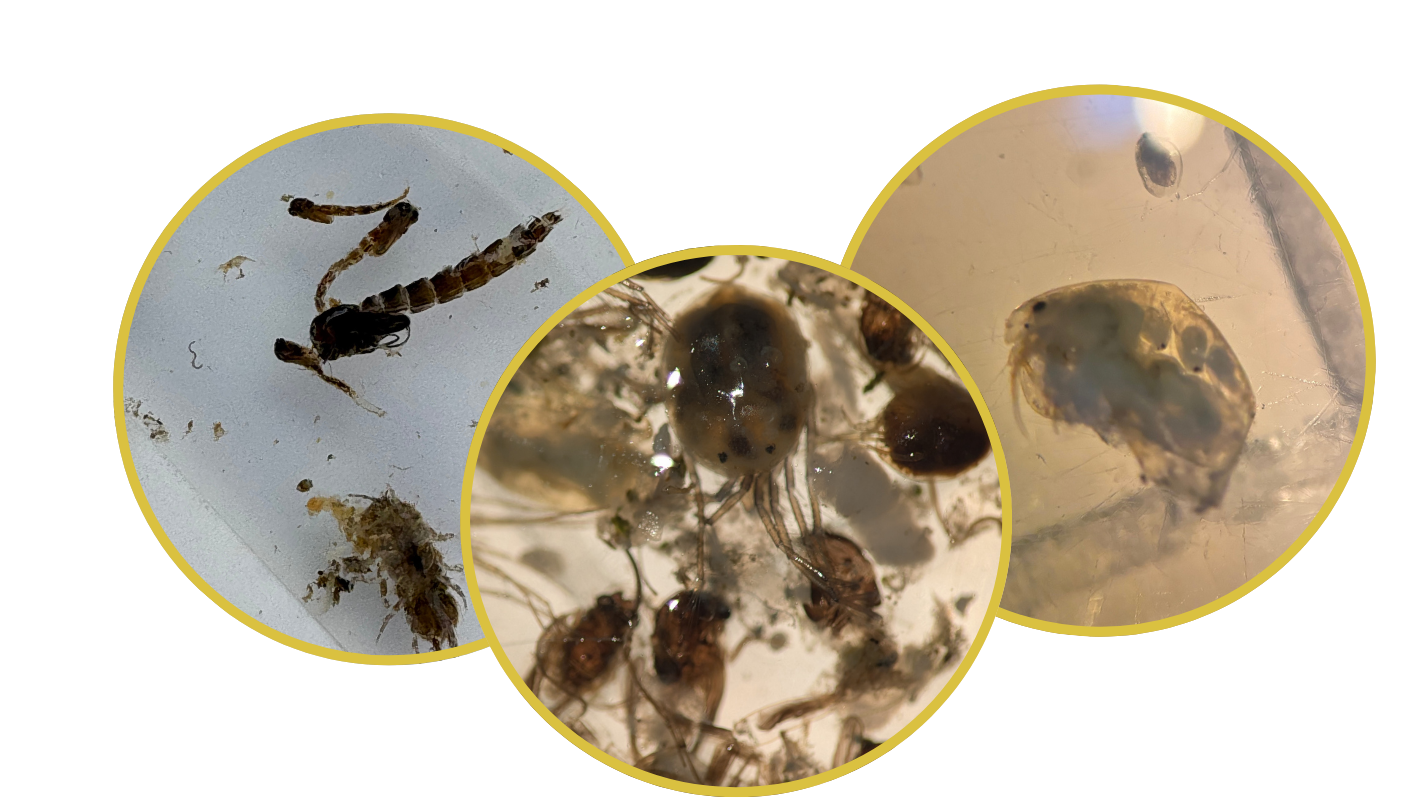
Above: Stomach contents of fish collected during surveys. From Left to Right: midge larvae; water mites; a pregnant water flea (with one baby that fell out).
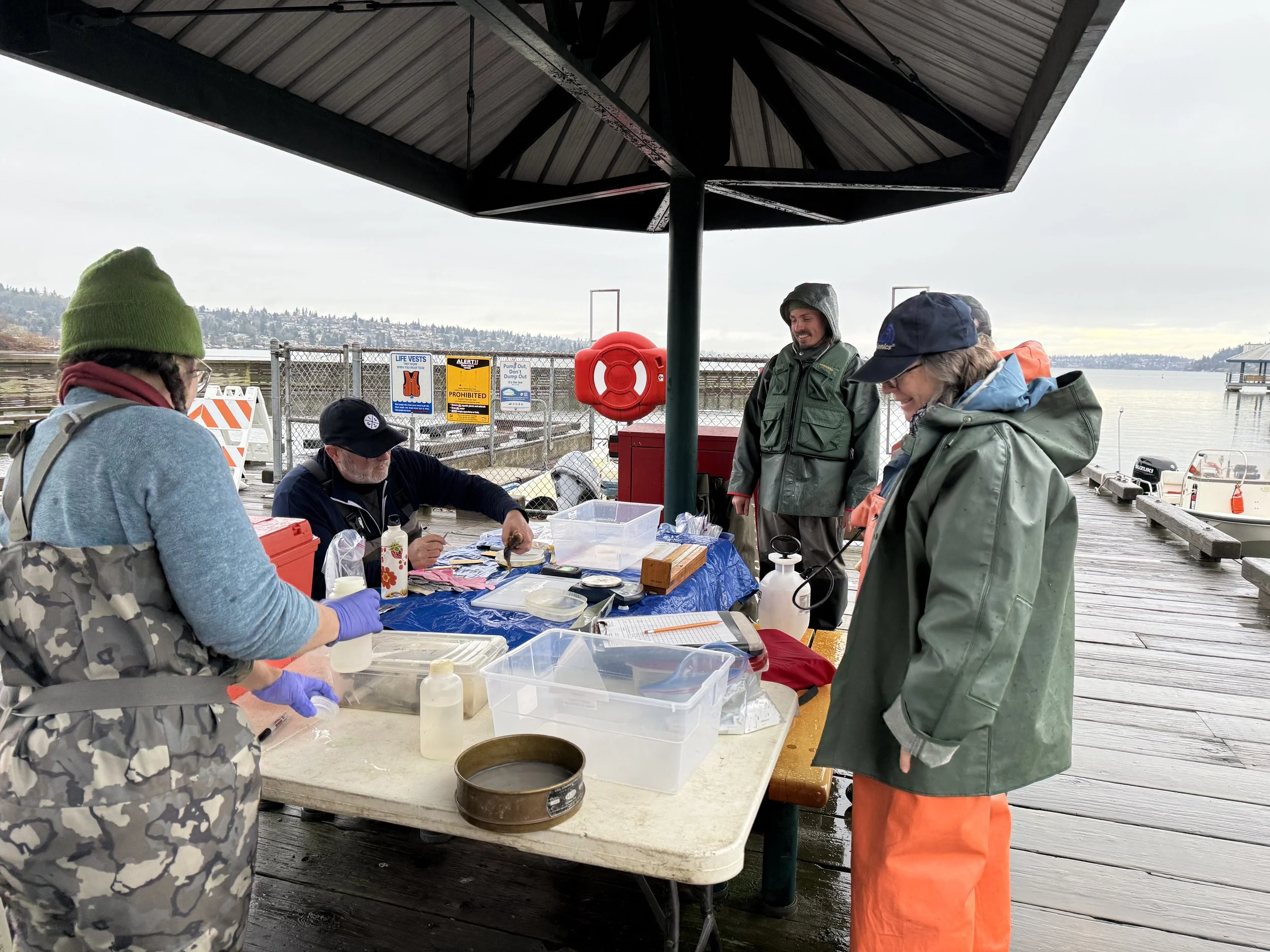
Right: The UW Research team pulling up a gill net that was set overnight.
Research Update: March 2026
Thank you to those of you who participated in the lights on/lights off study this month! The Cedar River hatchery has already released several million baby sockeye salmon in 2026, and we have seen some of these tiny salmon along the shoreline at night with our acoustic camera. We expect to see more fish in the next months as the water warms and fish grow.
Who We’ve Seen
In our overnight nets, we caught yellow perch and two hybrid coastal cutthroat/rainbow trout. All had either non-biting flies and other bugs in their stomachs or had empty stomachs. Fish caught near the mouth of the Cedar River also had bugs and plankton for diets.
We plan to return to your shorelines on back-to-back nights in April, May, and June, as close to the new moon as possible.
Upcoming Tentative Testing Dates:

We will check in a week before to let you know when we’ll be on the water. As the lake levels rise from snow melt, we expect young salmon to begin using the extra shallow habitats along your shorelines--small beaches, ramps, and steps--for refuge at night.
Check out our Instagram @uw_wetlandecosystemteam for periodic updates on this and other projects we are working on.
See you in April!
Kerry Accola
Video Above: Acoustic camera footage of juvenile salmon navigating the shoreline at night
Video Above: USGS Team dropping gill nets in the research area.
Salmon Habitat in Lakes
South Lake Washington shorelines are crucial habitat for young salmon as they leave the Cedar River. Along these shorelines, they eat and grow and seek refuge from predation before they leave for the Ballard Locks and ocean life.
Shallow habitats provide safety from predators for salmon. Shoreline habitats also frequently have high levels of shoreline lighting at night, known to attract salmon and other fish.
We Need Your Help!
A select number of homeowners (5 houses) can help!
Your shoreline has been chosen because these shorelines have high densities of salmon at night, and extra shallow habitats that salmon prefer to rest and take refuge in at night.
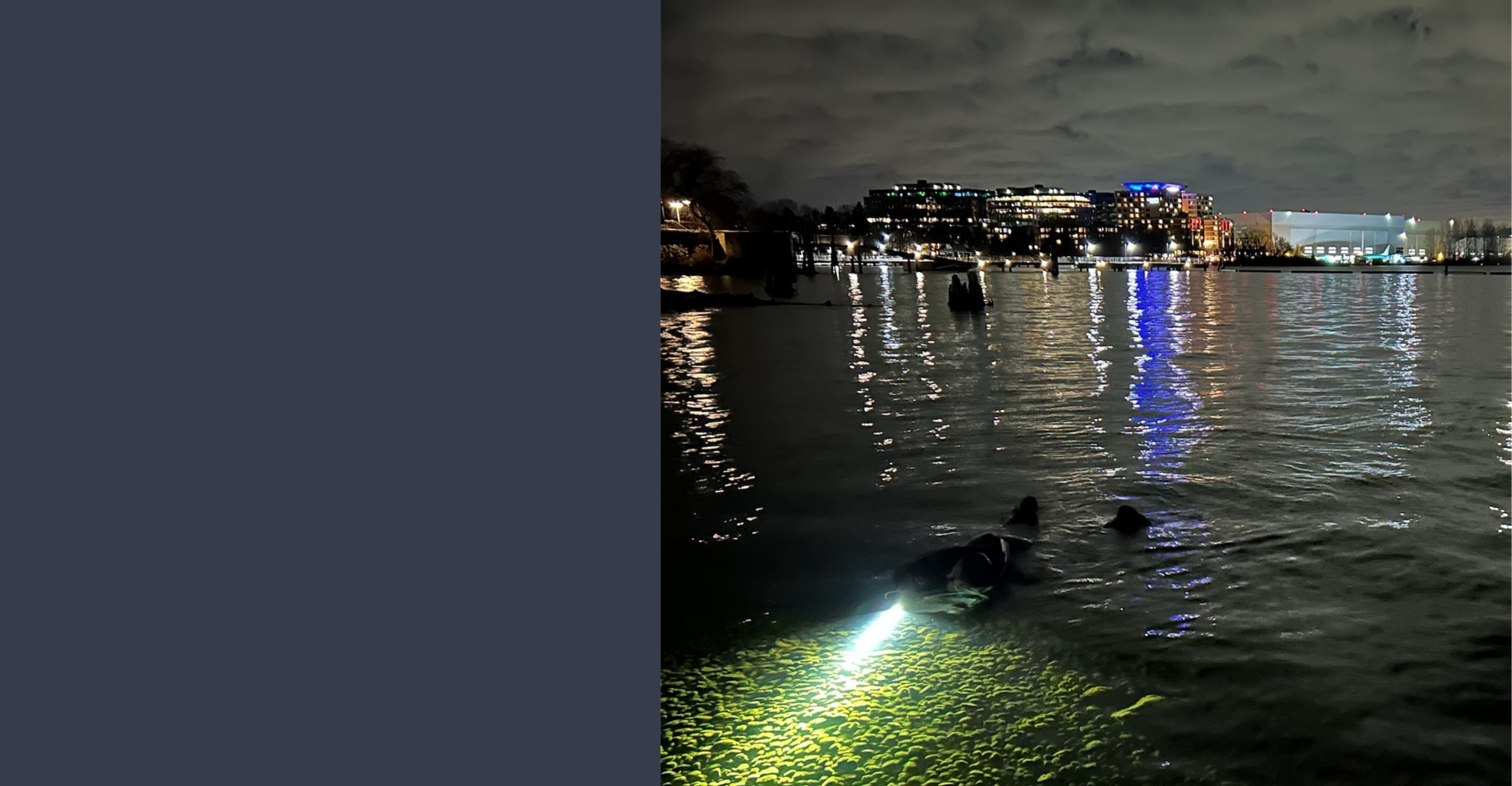
For one night per month, from February to May (4 nights total) 2026, we ask for participation in a meaningful contribution; modifying your outdoor lighting. On the designated night, we ask that you and your neighbors turn your dock and yard lights off, and on another night that month, we will ask you to please keep them on as usual.
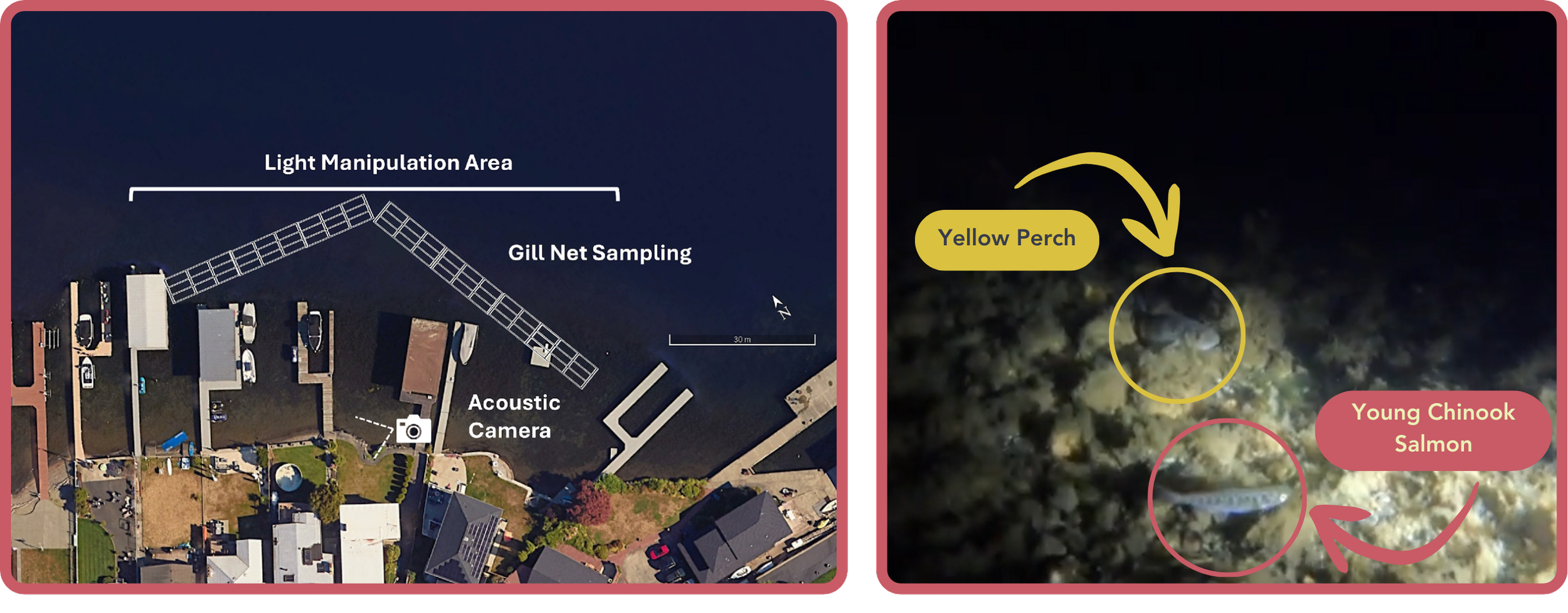
During February – May 2026, UW and USGS scientists will be setting nets offshore to study predator fish populations. Scientists will set nets at night and pick them up in the morning, trapping yellow perch and other potential salmon predators. The net holes will be large enough that salmon can swim through—they will not be captured. Scientists will study yellow perch stomach contents to see if they eat salmon during the night, or if they rest, as both perch and salmon avoid larger predators in deeper waters.
We hope to better understand if, when, and where young salmon are eaten at night. This work will help contribute to salmon recovery by prioritizing key components to their early survival.
What We’ll Be Doing:
Night Lighting & Shallow Habitats:
How Do They Interact?
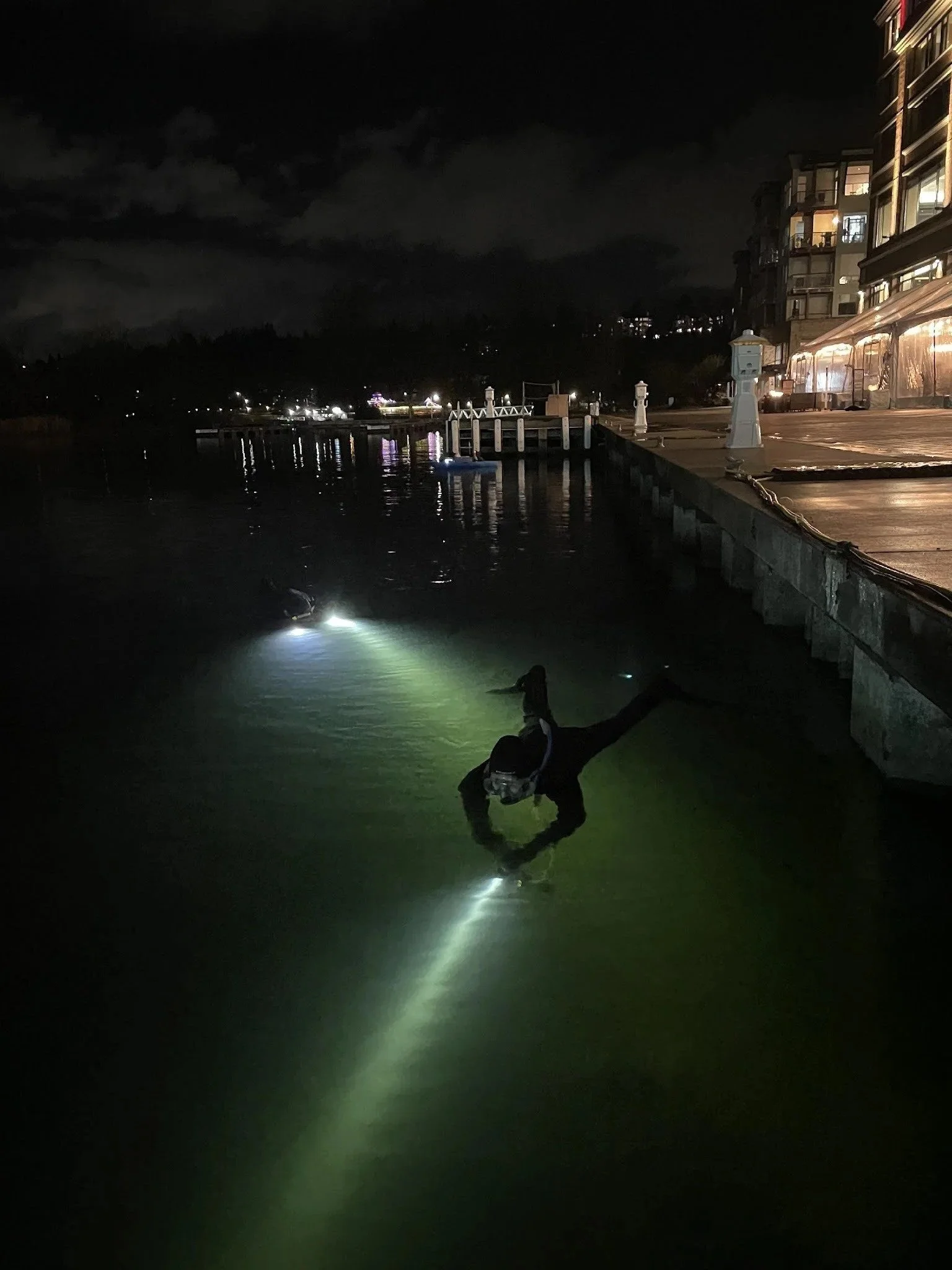
In 2024, UW scientists snorkeled along South Lake Washington shorelines day and night (February-April) to study young salmon as they left the Cedar River.
Salmon and other fish, especially non-native yellow perch, were uncommon along shorelines during the day but were common at night in large numbers, when the fish came to shore to rest for the night.
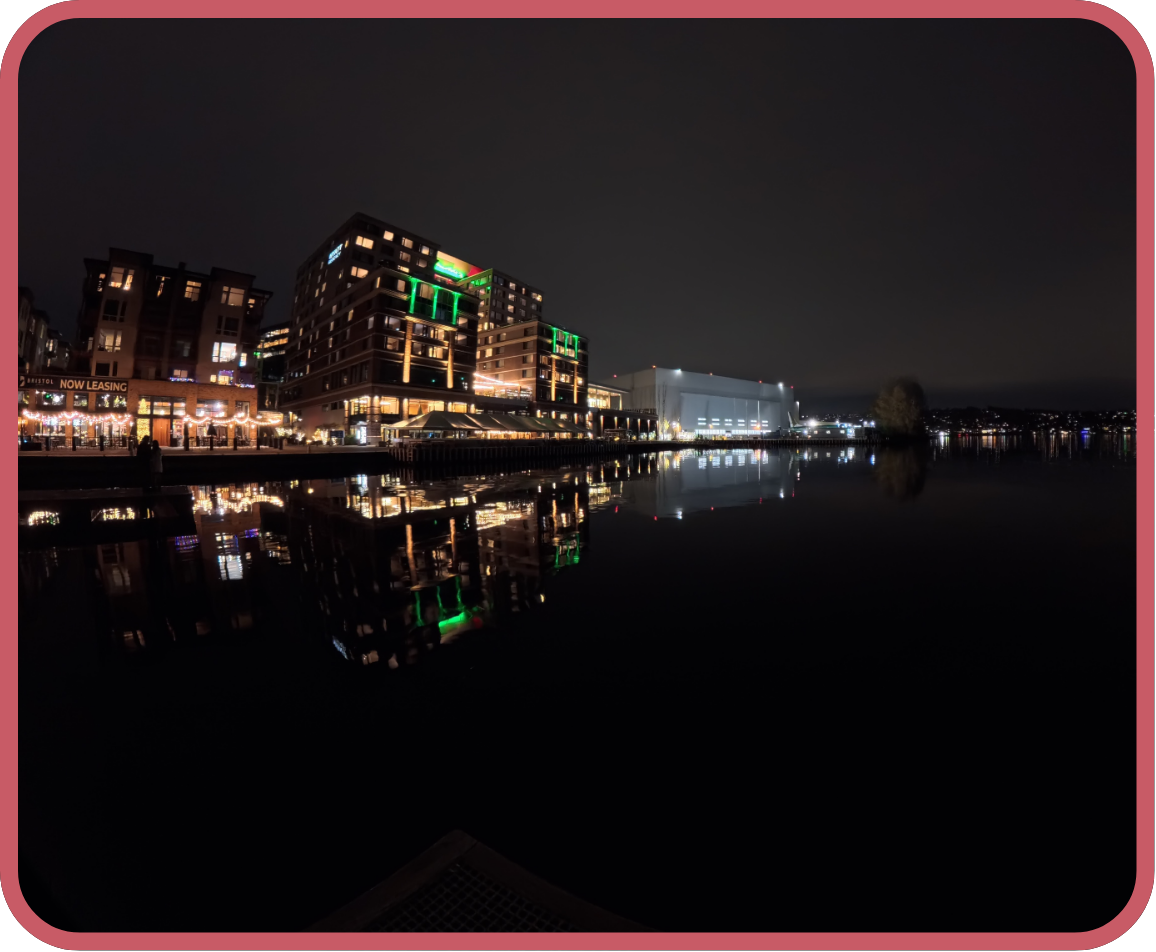
Salmon are known to be attracted to lighting at night, but the salmon were most common along residential shorelines (yours!) rather than at locations with the highest lighting (Boeing, Hyatt hotel), meaning they are more attracted to shallow habitats than to light, likely trying to stay safe from predation.
During studies of juvenile salmon, researchers found that 30% of young Chinook counted during the study were found in extra shallow (1 ft) residential habitats (pocket beaches or concrete ramps), even though these shallow habitats were less common.
Using this new information, researchers want to study if smaller predators like yellow perch use light to hunt at night, or if all fish rest together from larger predators. So, they are returning in 2026 to the shallows of Lake Washington!
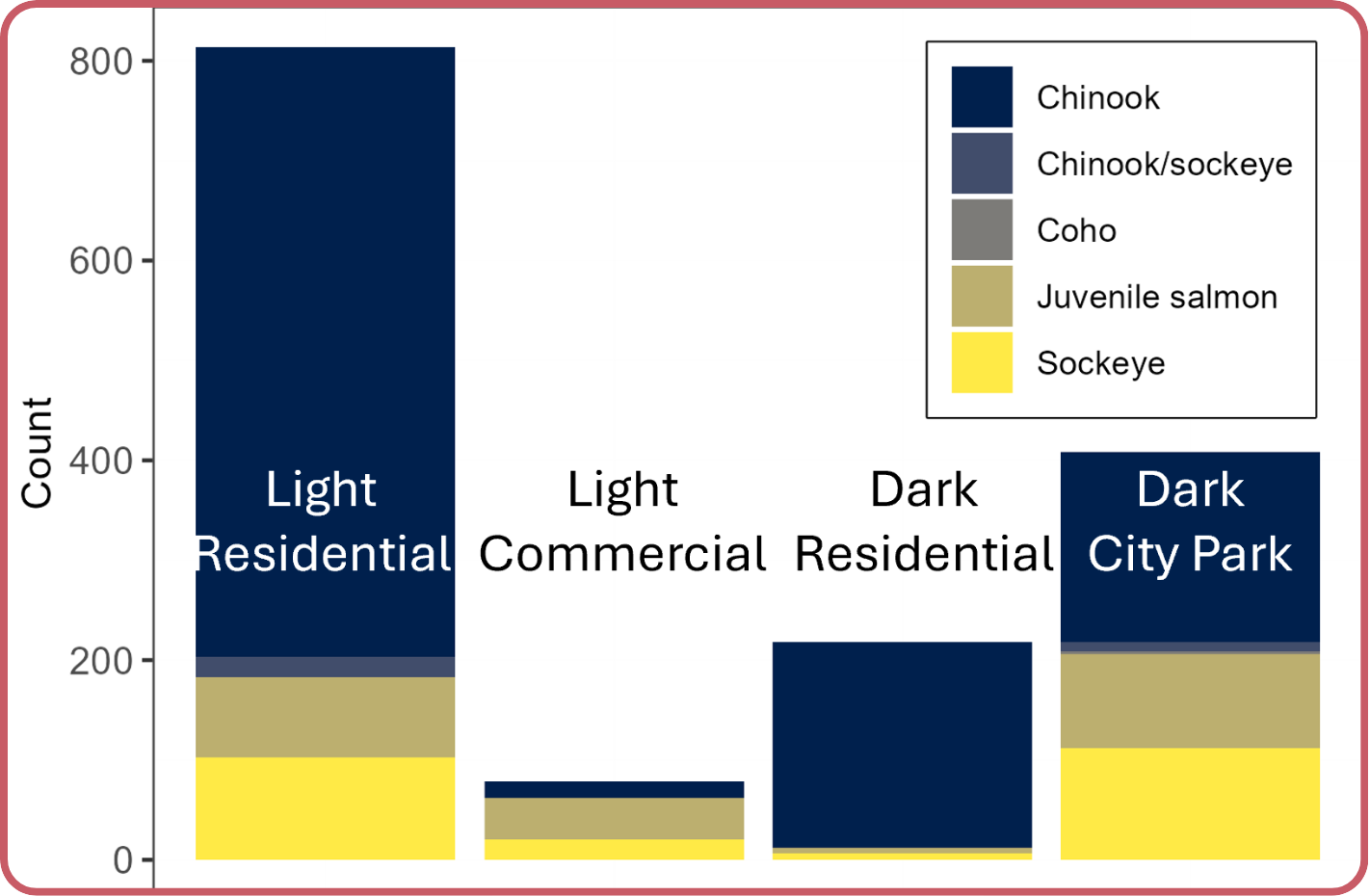
Plot showing night locations of salmon in S. Lake Washington. Most salmon were along residential shorelines with yard and dock lights; next, Gene Coulon Park. Few salmon were at Boeing or Hyatt hotel, which have high light at night.
What More Can We See?
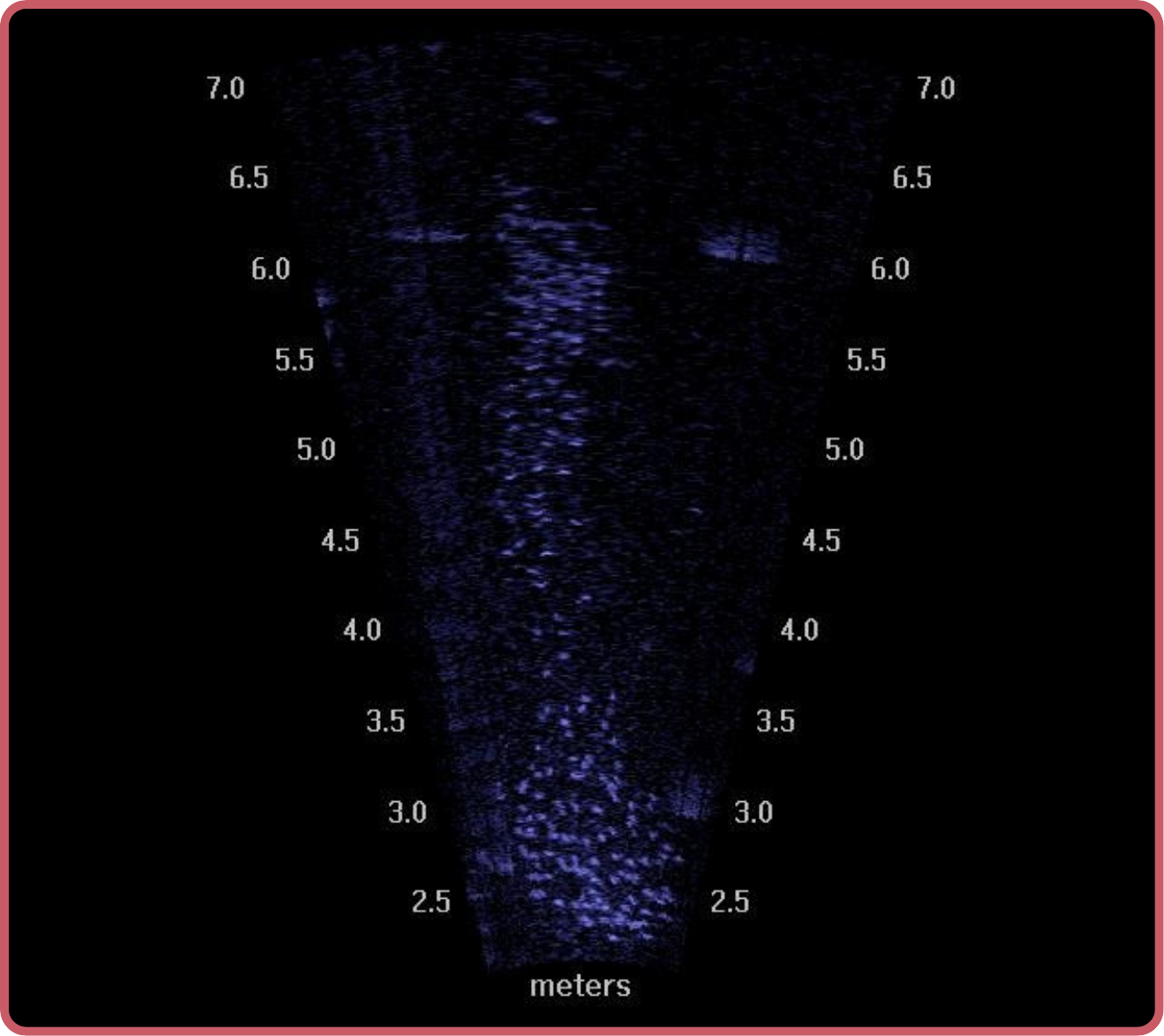
UW scientists hope to set an acoustic camera at an extra shallow habitat to see how many salmon use the habitats, and how salmon and yellow perch interact at night.
An acoustic camera takes images using sound and turns them into digital images - think of these as a snapshot in time. To the right is an acoustic image of a school of ~250 young chum salmon. Images are captured 2-7 m in front of the camera. We will be able to ‘see’ what happens at night without disturbing the fish.
We would greatly appreciate your participation in this study. Please contact us with any questions!
Kerry Accola | University of Washington | kaccola@uw.edu